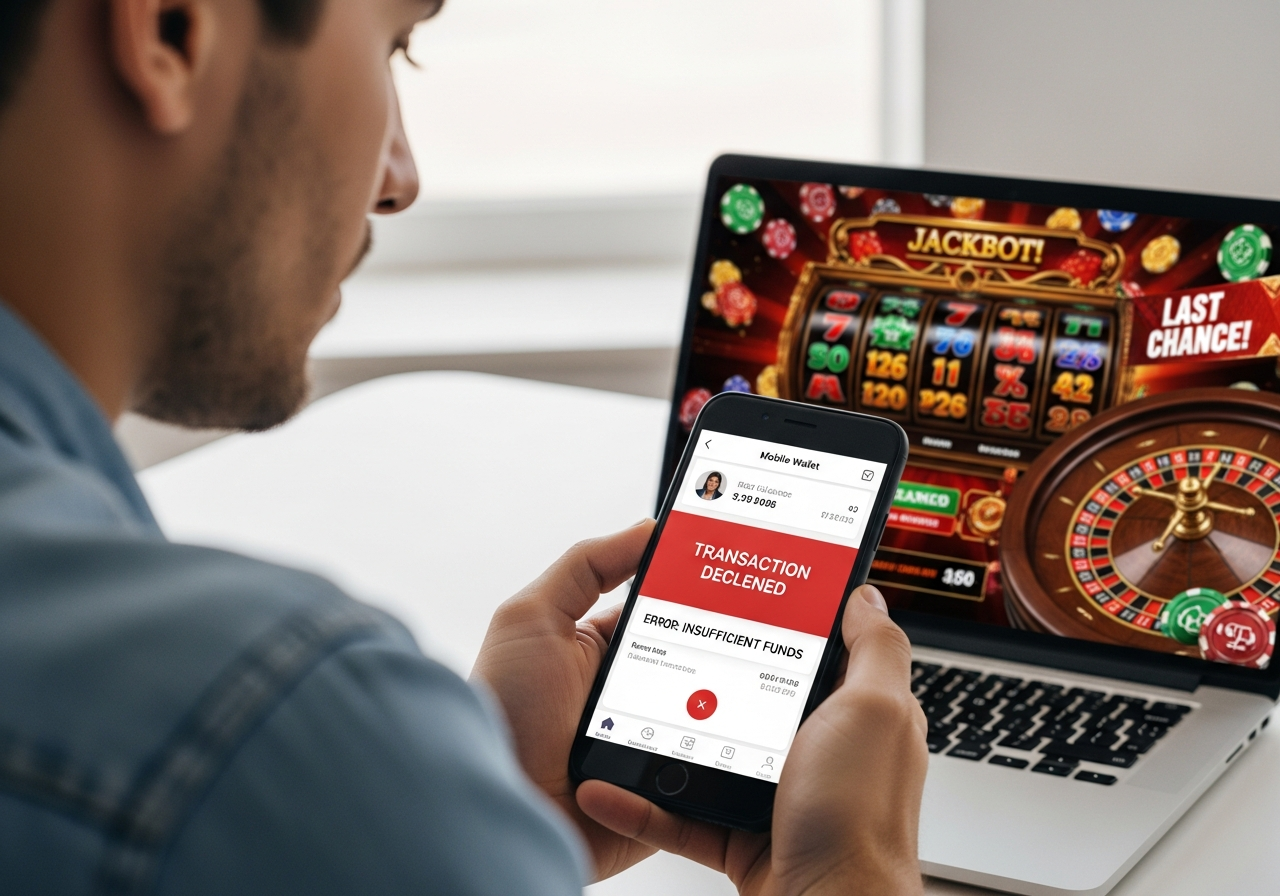
Mobile money has revolutionized financial transactions in Ghana, with MTN MoMo, Vodafone Cash, and AirtelTigo Money becoming the preferred payment methods for online casino withdrawals. However, many Ghanaian players experience frustrating rejection issues when trying to cash out their winnings to these digital wallets. These problems stem from complex interactions between casino security systems, mobile network operator policies, and Ghana’s evolving financial regulations.
This comprehensive guide examines the main reasons why casino withdrawals to mobile money wallets get rejected, covering everything from KYC verification problems and technical network issues to bonus violations and regulatory compliance challenges. We’ll also provide step-by-step solutions for resolving rejected transactions, prevention strategies, and tips for choosing reliable casinos that support smooth mobile money payouts. Most withdrawal issues can be resolved once players understand how casino anti-fraud measures and mobile money verification systems work together.
How Mobile Money Casino Withdrawals Work in Ghana
When a player requests a withdrawal from their casino account to a mobile money wallet, the transaction passes through multiple verification stages before funds reach the destination wallet. The casino first validates the withdrawal request against the player’s account balance, bonus terms, and KYC status. The payment is then processed through a payment gateway that connects with the appropriate mobile network operator’s systems for final delivery.
Each mobile money service in Ghana has specific requirements for receiving funds, particularly regarding identity verification and transaction limits. The process involves real-time fraud monitoring by both the casino and mobile network operators, creating multiple points where transactions can be flagged or rejected. Understanding these verification layers helps players identify where problems occur and how to address them effectively.
Ghana’s mobile money ecosystem operates under strict regulatory oversight, with operators required to verify user identities and monitor transactions for compliance with anti-money laundering rules. This creates additional complexity when casino payments interact with these systems, especially for high-value transactions or accounts with incomplete verification.
| Mobile money service | Typical casino use (deposit/withdrawal) | Basic limits & ID expectations | Common issues for gamblers |
|---|---|---|---|
| MTN MoMo | Both deposit/withdrawal widely supported | GHS 10,000 daily, Ghana Card required | Name mismatch rejections, fraud flags |
| Vodafone Cash | Limited casino support, mainly deposits | GHS 5,000 daily, ID verification needed | Technical routing errors, agent problems |
| AirtelTigo Money | Deposit focus, limited withdrawal options | GHS 3,000 daily, passport/voter ID accepted | Network downtime, low casino integration |
| Zeepay | Emerging withdrawal option | GHS 8,000 daily, digital KYC process | Limited casino partnerships |
| G-Money | Mainly deposits, few withdrawal partnerships | GHS 2,000 daily, basic verification | Compatibility issues with international casinos |
Why Ghana Players Prefer Mobile Money for Casino Payouts
Mobile money offers unmatched convenience for Ghanaian casino players, providing instant access to winnings in local currency without requiring traditional bank accounts. Most betting sites actively promote mobile money options through bonuses and reduced fees, recognizing that over 80% of Ghana’s adult population uses these services regularly. This preference aligns with mobile money’s role in financial inclusion, allowing players in rural areas or those without formal banking relationships to participate in online gambling.
The instant nature of mobile money transactions appeals to players who want immediate access to their winnings for daily expenses or reinvestment in gambling activities. Unlike bank transfers that can take 2-3 business days, successful mobile money withdrawals typically complete within minutes. However, this speed comes with increased monitoring challenges for both casinos and mobile operators, who must balance quick processing with fraud prevention measures.
Marketing by betting sites has further cemented mobile money’s popularity, with many platforms offering exclusive bonuses for mobile money users or waiving withdrawal fees for these payment methods. This promotional approach has created player expectations for seamless mobile money integration, making withdrawal rejections particularly frustrating when they occur.
Key Parties Involved in a Mobile Money Casino Withdrawal
A typical mobile money casino withdrawal involves four main parties, each with specific responsibilities and potential points of failure. The casino operator initiates the process by validating the withdrawal request against account terms and security protocols. Payment gateways then serve as intermediaries, converting casino instructions into mobile money network commands while handling currency conversion and routing logistics.
Mobile network operators like MTN, Vodafone, and AirtelTigo maintain the final transaction infrastructure, applying their own fraud detection and compliance checks before crediting funds to player wallets. Mobile money agents, though not directly involved in digital transactions, can still impact the process when players need to convert digital funds to cash or when agent-level restrictions affect account functionality.
Each party operates independent verification systems that must align for successful transactions, creating multiple opportunities for rejections when information doesn’t match perfectly across platforms. Understanding these roles helps players diagnose whether withdrawal problems originate from casino policies, payment gateway issues, or mobile operator restrictions.
Core Reasons Casino Withdrawals to Mobile Money Get Rejected
Casino withdrawal rejections to mobile money wallets typically stem from verification failures, regulatory compliance issues, or technical problems that prevent successful transaction completion. The most common causes involve mismatched identity information between casino accounts and mobile wallets, incomplete KYC documentation, or violations of bonus terms and wagering requirements. These issues often compound when players use multiple accounts or attempt to circumvent platform restrictions.
Fraud prevention systems represent another major source of rejections, with both casinos and mobile operators using sophisticated algorithms to flag suspicious activity patterns. High-value withdrawals, unusual timing patterns, or transactions from shared devices can trigger automatic blocks that require manual review to resolve. Geographic restrictions and regulatory compliance requirements add further complexity, particularly for international casino operators serving Ghanaian players.
Technical failures, while less common, can also result in rejected transactions when payment gateways experience connectivity issues or mobile networks face capacity constraints. The introduction of Ghana’s e-levy system has created additional processing delays and potential rejection points, particularly for transactions approaching tax thresholds. Understanding these diverse causes helps players identify appropriate solutions for their specific situations.
- Incomplete or mismatched KYC verification between casino account and mobile money wallet registration details
- Name discrepancies where casino account names don’t exactly match mobile wallet registered names
- Unfulfilled bonus wagering requirements or violations of promotional terms and conditions
- Fraud detection flags triggered by unusual betting patterns, device sharing, or suspicious login activity
- Exceeded daily or monthly withdrawal limits set by either the casino or mobile money operator
- Jurisdiction problems where international casinos can’t process payments to certain mobile networks
- Account restrictions imposed due to responsible gambling measures or self-exclusion settings
Casino-Side vs Mobile Money-Side Rejection Triggers
Distinguishing between casino-initiated and mobile money-side rejections requires understanding each platform’s specific requirements and restrictions. Casino rejections typically occur during the initial validation phase and relate to account terms, bonus compliance, or anti-fraud measures. These rejections usually appear immediately in the casino’s transaction history with specific error codes or explanatory messages about the failure reason.
Mobile money-side rejections happen later in the process, often after the casino has already approved and initiated the transaction. These failures result from mobile operator policies, wallet verification issues, or network technical problems. Players experiencing mobile money-side rejections may see transactions marked as “pending” for extended periods before eventual rejection notifications arrive.
Effective diagnosis involves checking both casino transaction history and mobile money account statements to determine where the process failed. Casino support can provide detailed logs for their portion of the transaction, while mobile operator customer service can investigate network-level issues. Players should gather information from both sources before attempting solutions to ensure they’re addressing the actual problem source.
Simple diagnostic steps include verifying that casino account names exactly match mobile wallet registration details, confirming that withdrawal amounts fall within established limits, and checking for any recent policy changes from either the casino or mobile operator that might affect transaction processing.
KYC, ID and Account Verification Problems Linked to Ghana Mobile Money
Know Your Customer (KYC) verification creates a critical intersection between casino security requirements and Ghana’s national identity documentation systems. Casinos typically require government-issued ID verification that matches exactly with player account registration details, while mobile money operators maintain separate verification databases linked to Ghana Card or other accepted identification documents. Discrepancies between these systems frequently cause withdrawal rejections.
Ghana’s evolving digital identity infrastructure adds complexity to this verification process, as older mobile money accounts may have been registered with different ID types before Ghana Card became mandatory. Players who registered casino accounts using passport information but verified mobile wallets with voter ID cards often encounter systematic rejection problems that require coordinated updates across both platforms.
The intersection of international casino KYC standards with local Ghanaian identification requirements creates additional friction points. Some offshore casinos accept utility bills or bank statements for address verification, while Ghana’s mobile money regulations specifically require government-issued photo identification with matching names and current residential information.
Common rejection scenarios include situations where players have legally changed names after marriage but only updated one platform, instances where mobile money accounts use abbreviated or alternative name spellings, and cases where ID document expiration affects verification status. These problems often manifest as permanent blocks rather than temporary delays, requiring proactive resolution through customer support channels.
Successful KYC alignment requires players to maintain consistent documentation across all platforms, regularly update expired identification documents, and understand how Ghana’s evolving digital identity standards affect both casino and mobile money verification requirements. This proactive approach prevents most verification-related rejection issues.
Name Mismatches Between Casino and Mobile Money Wallets
Name mismatches represent the most common verification problem affecting mobile money casino withdrawals, occurring when slight differences in spelling, formatting, or completeness trigger automated rejection systems. These systems require exact character-by-character matches between casino account names and mobile wallet registration details, making even minor discrepancies problematic.
Resolution typically involves systematic verification and updating processes across both platforms to ensure perfect alignment of personal information. Players must be prepared to provide supporting documentation and work with customer support teams from both casino and mobile money providers to resolve these issues effectively.
- Contact casino customer support to verify the exact name format stored in your account profile and request documentation showing this information
- Check your mobile money wallet registration details by contacting operator customer service or visiting an authorized agent with proper ID
- Identify specific differences between the two name formats, noting variations in spelling, spacing, hyphenation, or inclusion of middle names
- Update the platform with incorrect information by submitting proper ID verification documents and requesting name correction
- Allow 48-72 hours for system updates to propagate before attempting another withdrawal transaction
Ghana’s ‘No ID, No Cashout’ Rules and Their Effect on Payouts
Ghana’s financial regulations mandate strict identity verification for all electronic money transactions, creating a “No ID, No Cashout” environment that significantly impacts casino withdrawal success rates. These rules were implemented to combat money laundering and terrorist financing, but they create legitimate barriers for players with incomplete or inconsistent documentation across different platforms.
The regulatory framework requires mobile money operators to verify customer identities using government-approved documents before processing high-value transactions or enabling full account functionality. Players with basic mobile money accounts may face withdrawal restrictions until they complete enhanced verification procedures at authorized agent locations or through digital KYC processes.
Mobile money agents, who serve as the physical interface for many transactions, play a crucial enforcement role in these ID requirements. Agents must verify customer identities for large transactions and may refuse service if documentation appears questionable or doesn’t match system records. This creates additional rejection points beyond digital verification systems.
The impact on casino payouts becomes particularly pronounced for players attempting to withdraw winnings to wallets with incomplete verification status or those trying to exceed daily limits without proper ID confirmation. Understanding these regulatory requirements helps players prepare appropriate documentation and choose withdrawal amounts that align with their account verification levels.
Technical Errors and Network Issues Affecting MoMo Casino Withdrawals
Technical problems affecting mobile money casino withdrawals range from temporary network connectivity issues to systematic compatibility problems between international payment systems and local mobile operators. These technical failures often present as pending transactions that eventually time out, creating confusion about whether payments were successfully processed or require resubmission.
Ghana’s mobile money infrastructure faces periodic capacity constraints during peak usage periods, particularly around salary payment dates or major holidays when transaction volumes spike dramatically. These congestion issues can cause legitimate casino withdrawals to fail or experience significant delays, especially for non-priority transaction types.
Payment gateway routing errors represent another common technical issue, occurring when international casino payment systems incorrectly format transaction requests for Ghana’s mobile money networks. These problems often affect specific transaction amount ranges or occur during maintenance windows when system integrations operate with reduced functionality.
| Issue type | Where it occurs (casino / payment gateway / MoMo network) | Typical symptoms | What the player should do |
|---|---|---|---|
| Network downtime | MoMo network | Immediate transaction failures, system error messages | Wait 2-4 hours and retry withdrawal |
| Payment routing errors | Payment gateway | Transactions stuck in pending status | Contact casino support with transaction ID |
| E-levy processing delays | MoMo network | 24-48 hour delays for amounts over GHS 100 | Allow extra processing time, verify tax deduction |
| Currency conversion failures | Payment gateway | Rejected transactions with currency error codes | Verify casino supports GHS withdrawals |
| Daily limit congestion | MoMo network | Rejections during peak hours (12-2pm, 6-8pm) | Retry during off-peak hours |
| API timeout errors | Casino | Generic system error messages, no transaction ID | Check account balance, wait 30 minutes before retry |
Pending vs Rejected vs Reversed Mobile Money Transactions
Understanding transaction status differences helps players respond appropriately to mobile money withdrawal problems and avoid unnecessary duplicate requests that can complicate resolution processes. Pending transactions remain in processing status while systems complete verification and routing procedures, typically resolving within 24 hours for successful payments or transitioning to rejected status if problems are identified.
Rejected transactions are definitively declined by either casino or mobile money systems, usually with specific error codes indicating the failure reason. These transactions don’t deduct funds from casino accounts and require players to address underlying issues before attempting new withdrawals. Rejected status is typically final and doesn’t change without player intervention.
Reversed transactions initially appear successful but are subsequently recalled due to verification failures, fraud flags, or technical issues discovered after initial processing. Reversals can occur several days after apparent completion and may involve temporary crediting followed by debit adjustments once problems are identified.
Ghana-specific dispute resolution involves contacting mobile money customer service within 48 hours of transaction problems, providing detailed information about expected payments, and maintaining communication with both casino and mobile operator support teams. Players should avoid multiple withdrawal attempts while disputes are pending to prevent account restrictions or additional complications.
Casino Rules: Bonuses, Wagering and Responsible Gambling Blocks
Casino bonus terms create complex withdrawal restrictions that frequently result in mobile money payout rejections, particularly when players attempt to cash out winnings before completing wagering requirements or violating promotional conditions. These restrictions apply regardless of the withdrawal method chosen, but mobile money’s popularity among bonus-seeking players makes these rejections particularly common for Ghana-based accounts.
Wagering requirements typically mandate that players bet bonus funds a specified number of times before becoming eligible for withdrawals, with different games contributing varying percentages toward requirement completion. Slots might contribute 100% while table games contribute only 10%, creating situations where players believe they’ve met requirements but system calculations show otherwise.
Responsible gambling measures implemented by licensed casinos can also trigger automatic withdrawal blocks when players exceed predetermined spending limits or exhibit concerning behavior patterns. These blocks are designed for player protection but can appear as unexplained rejection messages if players aren’t aware of active restrictions on their accounts.
- Incomplete wagering requirements on active bonuses, including deposit match bonuses and free spins winnings
- Maximum withdrawal limits imposed on bonus-derived winnings, typically ranging from 5x to 20x the bonus amount
- Restricted game play violations where bonus funds were used on prohibited games like live dealer or progressive jackpots
- Multiple account detection systems flagging similar mobile money numbers across different casino accounts
- Responsible gambling deposit limits that prevent withdrawals when monthly spending thresholds are exceeded
- Fraud prevention holds triggered by unusual betting patterns or device sharing between multiple accounts
- Account cooling-off periods automatically applied after large wins or extended playing sessions
Typical Bonus Violations That Lead to Blocked Withdrawals
Ghana-specific bonus violations often involve players using multiple mobile money wallets to claim duplicate welcome offers or circumvent promotional limits across different casino accounts. This practice is easily detected by casinos that cross-reference mobile money numbers with account registration data, leading to permanent withdrawal blocks and potential account closures.
Another common violation involves attempting to withdraw winnings immediately after claiming bonuses without understanding that wagering requirements apply to the entire account balance, not just bonus portions. Players may complete what they believe are sufficient wagering activities only to discover that their game selections contributed minimally toward requirement completion, leaving substantial obligations unfulfilled.
When Casinos Use Risk Checks on Mobile Money Activity
Artificial intelligence systems monitor mobile money transaction patterns for irregularities that might indicate fraudulent activity or bonus abuse, automatically flagging accounts that exhibit suspicious characteristics. These systems analyze factors like transaction timing, amount patterns, device fingerprinting, and correlation with other flagged accounts to assess risk levels.
Risk checks become particularly sensitive when players use shared devices or internet connections, such as those common in Ghana’s internet cafes or shared housing situations. Multiple accounts accessing the same casino from identical devices while using mobile money withdrawals to similar number ranges can trigger automatic investigation holds that prevent withdrawals until manual review is completed.
Mobile Money Limits, Fees and Agent Behaviour Players Overlook
Mobile money transaction limits create frequently overlooked barriers to successful casino withdrawals, with daily, monthly, and per-transaction thresholds varying significantly between operators and account verification levels. These limits often interact with casino withdrawal policies in complex ways, creating situations where players can deposit funds but cannot withdraw equivalent amounts due to asymmetric limit structures.
Agent behavior represents another critical factor affecting withdrawal success, as individual agents may refuse to process high-value transactions from gambling sources due to personal beliefs, regulatory concerns, or insufficient cash flow to handle large payouts. This creates geographic variations in withdrawal success rates that players must navigate carefully when choosing cashout locations.
The introduction of Ghana’s e-levy system has added fee calculation complexity that can affect transaction success rates, particularly for amounts approaching tax thresholds where processing delays or technical issues become more common. Players must factor these fees into withdrawal planning to ensure net amounts meet minimum payout requirements after tax deductions.
| Factor | How it can cause a rejected or failed withdrawal | Ghana-specific example | Practical workaround |
|---|---|---|---|
| Daily transaction limits | Automated rejection when withdrawal exceeds wallet’s daily receiving limit | MTN MoMo basic account limited to GHS 2,000 daily | Split large withdrawals across multiple days |
| Agent cash availability | Unable to convert digital wins to physical cash at local agents | Rural agents refusing GHS 5,000+ casino payouts | Use digital wallet balance for purchases, identify high-volume agents |
| E-levy calculation errors | Processing delays when tax calculation systems malfunction | GHS 1,500 withdrawal stuck in e-levy processing queue | Withdraw amounts under GHS 100 to avoid e-levy complications |
| Account verification tiers | Higher withdrawals rejected due to insufficient account verification level | Vodafone Cash Tier 1 accounts limited to GHS 500 transactions | Complete full KYC verification to unlock higher limits |
| Cross-network compatibility | Payment gateway routing failures between different mobile operators | International casino unable to process AirtelTigo Money withdrawals | Maintain wallets with multiple operators for backup options |
Why Some MoMo Agents Decline Withdrawals or Deposits From Gamblers
Mobile money agents exercise considerable discretion in transaction approval, with many choosing to decline gambling-related transactions due to religious beliefs, regulatory uncertainty, or concerns about handling potentially disputed funds. These agents may recognize patterns in transaction amounts, timing, or frequency that suggest gambling activity and refuse service accordingly.
Commission structures also influence agent behavior, as high-value casino withdrawals generate relatively small fees compared to the risk and cash flow requirements involved in processing these transactions. Agents prefer multiple smaller transactions that generate equivalent fees without requiring large cash reserves or potential dispute resolution efforts.
Regulatory compliance concerns motivate some agents to avoid gambling transactions entirely, particularly in regions where enforcement of anti-gambling laws remains inconsistent. Agents may worry about potential liability for facilitating illegal gambling activity, even when transactions themselves are technically legal under current mobile money regulations.
- Religious or moral objections to facilitating gambling activities, leading to blanket refusal of casino-related transactions
- Cash flow limitations where agents cannot provide sufficient physical currency for large withdrawal amounts
- Regulatory uncertainty causing agents to avoid potentially controversial transaction types
- Low commission rates on high-value transactions making gambling payouts economically unattractive
- Previous experience with disputed transactions or chargebacks related to gambling activities
- Geographic concentration of gambling activity overwhelming local agent capacity during peak payout periods
Step-by-Step: What to Do When Your Casino Withdrawal to MoMo Is Rejected
Systematic troubleshooting of rejected mobile money casino withdrawals requires a structured approach that addresses the most common causes before escalating to advanced resolution methods. Players should begin with basic verification steps and gradually progress through more complex diagnostic procedures, maintaining detailed records throughout the process to support eventual customer service interactions.
The resolution process typically involves parallel communication with both casino customer support and mobile money operator services, as withdrawal failures often result from coordination problems between these systems rather than issues with individual platforms. Effective resolution requires patience and persistence, as complex cases may take several business days to investigate and resolve completely.
Documentation plays a crucial role in successful dispute resolution, with players needing to maintain screenshots, transaction IDs, communication records, and account verification details to support their claims. This information becomes essential when cases require escalation to regulatory bodies or when disputing charges with payment processors involved in the failed transaction chain.
- Check your casino account transaction history and mobile money wallet statements to confirm whether funds were actually deducted from your casino balance
- Verify that your mobile money wallet registration details exactly match your casino account KYC information, including name spelling and formatting
- Confirm that your withdrawal amount falls within both casino and mobile money daily/monthly limits for your account verification level
- Review any active casino bonuses to ensure all wagering requirements have been completed and no promotional restrictions apply
- Contact casino customer support with your transaction ID, account details, and specific error messages to investigate the rejection reason
- If casino support indicates the payment was successfully sent, contact your mobile money operator’s customer service to investigate network-side issues
- Allow 48-72 hours for investigation and follow up with both parties if no resolution is provided within the promised timeframe
- Document all communication and escalate to supervisors or regulatory bodies if standard support channels fail to resolve the issue
When to Escalate to Regulator or Consumer Protection Bodies in Ghana
Escalation to Ghana’s Gaming Commission becomes appropriate when casinos fail to respond to legitimate withdrawal requests within reasonable timeframes or provide inadequate explanations for rejected transactions. The Commission maintains specific procedures for handling player complaints and can investigate whether casino practices comply with licensing requirements and consumer protection standards.
Consumer protection bodies, including the Consumer Protection Agency and Bank of Ghana’s Financial Consumer Protection Division, can assist with mobile money-related disputes that involve unfair treatment or policy violations by mobile operators. These agencies have enforcement powers that can compel resolution of legitimate complaints when standard customer service channels prove ineffective.
Effective escalation requires comprehensive documentation of all previous resolution attempts, including communication records with both casino and mobile money provider support teams. Regulators typically require evidence that players made good-faith efforts to resolve issues directly before accepting complaints for formal investigation.
Players should escalate cases involving suspected fraud, systematic policy violations, or refusal to honor legitimate withdrawal requests after reasonable resolution timeframes have elapsed. Minor technical issues or disputes involving bonus terms may not warrant regulatory intervention and can often be resolved through persistent customer service engagement.
Information to Include When Contacting Casino or MoMo Support
- Complete transaction ID numbers and timestamps for failed withdrawal attempts
- Screenshots of error messages, account balances, and transaction history from both casino and mobile money platforms
- Account registration details including usernames, mobile numbers, and verification document reference numbers
- Detailed description of withdrawal amount, intended mobile money wallet, and specific failure symptoms experienced
- Summary of previous troubleshooting attempts and any solutions already tested without success
- Contact information and preferred communication methods for follow-up and resolution updates
- Documentation of account verification status and any recent changes to personal information or payment methods
Preventing Rejected Casino Withdrawals: Best Practices for Ghana Players
Proactive prevention of mobile money withdrawal rejections requires careful attention to account setup, verification maintenance, and transaction planning that anticipates potential system compatibility issues. Players who establish consistent documentation across all platforms and maintain updated verification status experience significantly fewer rejection problems than those who neglect these foundational requirements.
Strategic approach to bonus utilization and withdrawal timing can also minimize rejection risks, with experienced players learning to avoid promotional complications and system overload periods that increase failure rates. Understanding the interaction between casino policies and mobile money regulations helps players structure their gambling activities to maintain smooth cashout capabilities.
Regular monitoring of policy changes from both casino operators and mobile money providers ensures that players can adapt their strategies before encountering rejection problems. This proactive approach includes staying informed about regulatory developments, system maintenance schedules, and promotional term modifications that might affect withdrawal success rates.
- Ensure your casino account name exactly matches your mobile money wallet registration details before making any deposits
- Complete full KYC verification on both casino and mobile money accounts using identical documentation and personal information
- Read and understand all bonus terms before claiming promotions to avoid wagering-related withdrawal restrictions
- Monitor your transaction patterns to avoid triggering fraud detection systems through irregular betting or withdrawal behavior
- Maintain withdrawal amounts well within established daily and monthly limits for your account verification level
- Keep your mobile money wallet active with regular small transactions to prevent account dormancy issues
- Update expired identification documents promptly on both platforms to maintain continuous verification status
- Avoid using shared devices or internet connections that might trigger security flags on your casino account
Managing MoMo Limits and Cash Flow Around Big Wins
Large casino wins require strategic withdrawal planning that accounts for mobile money daily limits, agent cash availability, and potential tax implications under Ghana’s e-levy system. Players should avoid attempting single large withdrawals that exceed system thresholds, instead structuring multiple smaller transactions spread across appropriate timeframes to ensure successful processing.
Diversification across multiple mobile money wallets provides backup options when individual accounts reach transaction limits or experience technical issues. This strategy requires maintaining active verification status across multiple operators but provides flexibility during high-volume withdrawal periods or when specific networks experience service disruptions.
Cash flow management becomes critical when large wins exceed immediate spending needs, as mobile money wallets have varying storage limits and security considerations that make them unsuitable for long-term value storage. Players should develop strategies for converting digital wins into more stable assets or investments while respecting regulatory requirements and tax obligations.
Timing considerations include avoiding peak mobile money usage periods when network congestion increases rejection rates, planning withdrawals around payroll dates when agent cash availability improves, and coordinating with casino customer service during business hours to ensure rapid resolution of any problems that arise during large withdrawal processing.
Choosing Safer Casinos and Betting Apps for Mobile Money in Ghana
Casino selection significantly impacts mobile money withdrawal success rates, with established operators demonstrating more reliable payment processing and better integration with Ghana’s mobile operator networks. Licensed casinos operating under regulatory oversight generally maintain superior withdrawal success rates compared to unlicensed alternatives, though licensing alone doesn’t guarantee seamless mobile money integration.
Local versus international operator considerations involve trade-offs between regulatory familiarity and processing capabilities, with Ghanaian-licensed operators often providing better mobile money support but potentially offering lower withdrawal limits than offshore alternatives. Players must evaluate these factors based on their individual gambling patterns and cashout requirements.
| Casino / app type | Licence & regulation | Mobile money options | Withdrawal reputation | Red flags to watch |
|---|---|---|---|---|
| Ghana-licensed operators | Gaming Commission oversight | Full MTN/Vodafone integration | Generally reliable, local support | Limited withdrawal limits, restricted game selection |
| International brands | Curacao, Malta, UK licenses | MTN MoMo focus, limited others | Variable, depends on payment processor | Regulatory uncertainty, complex terms |
| Sports betting apps | Mixed licensing status | Comprehensive MoMo support | Fast for small amounts | Bonus abuse restrictions, odds manipulation |
| New market entrants | Pending or offshore only | Limited integration | Unproven track record | Aggressive bonuses, unclear terms |
| Cryptocurrency focused | Minimal traditional licensing | Third-party MoMo gateways | Technical complications | Conversion fees, regulatory gaps |
Red Flags for Sites That Often Reject or Delay Withdrawals
Identifying problematic gambling sites before depositing funds helps players avoid withdrawal rejection problems that stem from poor business practices or inadequate payment system integration. Warning signs often appear in promotional materials, terms and conditions, or customer service interactions that suggest operational deficiencies likely to affect payout reliability.
- Absence of clear gambling licenses or reliance solely on questionable offshore jurisdictions with minimal oversight
- Vague or overly complex withdrawal terms that create numerous opportunities for rejecting legitimate payout requests
- Customer complaints on review platforms specifically mentioning mobile money withdrawal problems or extended processing delays
- Excessive bonus wagering requirements combined with game restrictions that make bonus completion practically impossible
- Poor customer service responsiveness or inability to provide clear explanations for account or withdrawal issues
- Recent market entry without established track record or verifiable payment processing partnerships with Ghana mobile operators
- Aggressive marketing tactics with unrealistic bonus offers that suggest unsustainable business models
Pros and Cons of Local vs Offshore Casino Payouts to MoMo
Local Ghanaian casinos typically provide superior mobile money integration and customer service accessibility, with support teams familiar with local banking regulations and mobile operator policies. However, these operators often impose lower withdrawal limits and offer restricted game selections compared to international alternatives, limiting their appeal for high-volume players.
Offshore casinos may provide higher withdrawal limits and more diverse gaming options, but their mobile money integration relies on third-party payment processors that introduce additional complexity and potential failure points. Currency conversion requirements and regulatory uncertainty can create unexpected complications for Ghana-based players seeking reliable cashout options.
Regulatory protection differs significantly between local and offshore operators, with Ghana Gaming Commission oversight providing clearer dispute resolution processes for licensed local operators. Offshore casinos may offer limited recourse options when withdrawal problems occur, placing greater responsibility on players to perform due diligence before establishing accounts.
The trade-off ultimately depends on individual player priorities, with casual players often benefiting from local operators’ reliability and regulatory protection, while experienced high-volume players may prefer offshore platforms despite their increased complexity and risk factors.
Legal, Tax and Policy Context Affecting Mobile Money Gambling Withdrawals
Ghana’s regulatory framework for mobile money gambling transactions operates through multiple overlapping authorities, with the Gaming Commission overseeing casino operations while the Bank of Ghana regulates mobile money operators and payment system integrity. This dual oversight creates complex compliance requirements that can impact withdrawal success rates when regulatory interpretations change or enforcement priorities shift.
Anti-money laundering (AML) requirements mandate extensive transaction monitoring and reporting for both casinos and mobile money operators, creating additional verification checkpoints that can trigger withdrawal rejections. These requirements become particularly stringent for high-value transactions or accounts exhibiting patterns that automated systems flag as potentially suspicious, even when activities are legitimate.
Tax policy changes, particularly the introduction of the e-levy system, have created new friction points in mobile money transactions that can affect gambling-related payments. The 1.5% levy on transactions exceeding GHS 100 adds processing complexity and potential delay points that casinos and mobile operators must navigate while maintaining efficient payment processing capabilities.
Policy coordination between different regulatory bodies remains an evolving challenge, with periodic conflicts or delays in guidance that can create temporary uncertainty about acceptable practices for mobile money gambling transactions. Players and operators must stay informed about these developments to maintain compliant operations and avoid rejection issues stemming from regulatory changes.
International compliance considerations affect offshore casino operations serving Ghana, with some operators restricting mobile money withdrawals during periods of regulatory uncertainty to avoid potential compliance violations. These restrictions can appear suddenly and without extensive player notification, creating unexpected barriers to accessing winnings through preferred payment methods.
How Policy Shifts Can Suddenly Change Withdrawal Success Rates
Regulatory policy changes can dramatically impact mobile money withdrawal success rates with minimal advance notice, as both gaming and financial regulators adapt to evolving technology and consumer protection concerns. These shifts often require rapid operational adjustments by casinos and mobile operators that can temporarily disrupt established payment processing procedures.
The implementation of enhanced KYC requirements following international pressure to combat money laundering resulted in immediate increases in withdrawal rejections as systems adapted to stricter verification standards. Many previously approved accounts required additional documentation that wasn’t immediately available, creating temporary barriers until players completed updated verification processes.
- Enhanced mobile money KYC requirements that immediately increased rejection rates for accounts with incomplete verification
- E-levy implementation creating processing delays and technical complications that affected transaction success rates
- Gaming Commission policy clarifications that required casinos to modify withdrawal procedures with limited transition periods
- Bank of Ghana mobile money regulations changes affecting transaction limits and processing requirements
- International sanctions or compliance requirements that forced operators to restrict certain payment methods temporarily
Responsible Gambling and Protecting Your Mobile Money Wallet
Mobile money wallet security becomes critically important for gambling activities, as these accounts often contain significant winnings and become targets for fraudulent activity. Players must implement comprehensive security measures that protect both gambling funds and personal financial information stored in mobile money systems, recognizing that wallet compromise can affect broader financial stability beyond gaming activities.
Responsible gambling practices intersect with mobile money management through spending controls, transaction monitoring, and separation of gambling funds from essential living expenses. Effective wallet management involves creating boundaries that prevent gambling losses from affecting bill payments, emergency funds, or family financial obligations maintained through mobile money systems.
Fraud prevention strategies must address both external threats and internal controls, with players needing to protect against unauthorized access while maintaining reasonable access to funds for legitimate gambling and daily financial activities. This balance requires understanding mobile money security features and implementing appropriate controls based on individual risk tolerance and financial circumstances.
- Use strong PINs that aren’t related to personal information like birthdates or phone numbers
- Enable transaction alerts and notification systems to monitor all account activity in real-time
- Separate gambling funds into dedicated wallets to prevent mixing with essential living expenses
- Set personal daily and monthly spending limits that align with your financial capabilities and responsibilities
- Regularly review transaction history for unauthorized or suspicious activity that might indicate account compromise
- Keep your mobile phone and SIM card secure to prevent unauthorized access to mobile money accounts
- Avoid sharing wallet details or PINs with family members or friends, even during emergency situations
Practical Wallet Safety Tips for Ghana Mobile Money Gamblers
PIN management represents the first line of defense against mobile money wallet compromise, with players needing to create complex codes that resist common attack methods while remaining memorable for frequent use. Avoid using sequential numbers, repeated digits, or codes related to easily discoverable personal information like birthdates, addresses, or family member ages that fraudsters might guess through social engineering.
One-time password (OTP) security requires careful management to prevent interception or misuse by unauthorized parties seeking to access gambling winnings stored in mobile wallets. Never share OTP codes received via SMS, even when contacted by individuals claiming to represent casino or mobile money customer service, as legitimate operators will never request these codes through unsolicited communications.
Device security extends beyond PIN protection to include physical phone security, SIM card protection, and careful management of mobile money applications installed on smartphones. Regular software updates, secure app downloads, and avoiding public WiFi for sensitive transactions help maintain comprehensive protection against both technical and social engineering attacks targeting gambling-related mobile money accounts.